


Introduction
Geomembranes provide an effective impermeable barrier for attenuation tanks, reservoirs, ponds and containment systems. However, the membrane itself can be vulnerable to puncture or abrasion if it comes into contact with sharp aggregates, construction materials or irregular ground conditions.
This is where protection geotextiles play an important role.
Rather than acting as the waterproof barrier, a protection geotextile is installed to help safeguard the geomembrane throughout installation and during the service life of the structure.
In this guide, we’ll explain how protection geotextiles work, when they should be used and why they are an important part of many geomembrane installations.
Topics Covered
- What is a protection geotextile?
- Why are protection geotextiles used?
- How do they protect geomembranes?
- Typical applications
- Choosing the right protection geotextile
- Frequently asked questions
What Is a Protection Geotextile?
A protection geotextile is a thick, non-woven geotextile specifically designed to help protect geomembranes from puncture, abrasion and mechanical damage.
Installed above, below or on both sides of a geomembrane, it acts as a cushioning layer between the membrane and surrounding construction materials.
Rather than preventing water movement like a geomembrane, the protection geotextile absorbs localised stresses from angular stone, concrete and other hard surfaces, helping preserve the integrity of the waterproof barrier.
Protection geotextiles are commonly manufactured from needle-punched polypropylene or polyester fibres, providing excellent cushioning while remaining durable and resistant to long-term installation loads.
Why Are Protection Geotextiles Used?
Although geomembranes are manufactured to be strong and durable, they can still be damaged by concentrated loads or sharp objects during installation.
A protection geotextile helps reduce this risk by creating a resilient buffer layer between the membrane and the surrounding materials.
Typical reasons for specifying a protection geotextile include: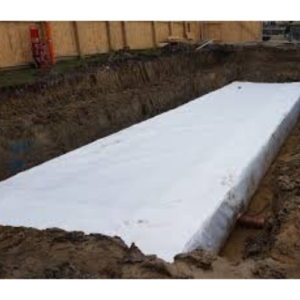
- Protecting geomembranes from puncture
- Reducing abrasion during installation
- Cushioning against angular aggregates
- Protecting attenuation tank liners
- Extending the service life of geomembrane systems
- Helping maintain the integrity of the waterproof barrier
Using a protection geotextile is often a small addition to the overall project cost but can provide valuable protection for a much larger investment in the geomembrane system.
How Do Protection Geotextiles Protect Geomembranes?
A protection geotextile acts as a cushioning layer between the geomembrane and surrounding construction materials.
Without this protective layer, sharp aggregates, concrete edges or irregular ground conditions can create concentrated pressure points against the membrane. During installation or under long-term loading, these pressure points may increase the risk of puncture or abrasion.
By introducing a thick, non-woven protection geotextile, these localised loads are spread across a larger surface area, helping reduce stress on the geomembrane.
Protection geotextiles may be installed beneath the geomembrane, above it, or on both sides depending on the application and the project specification.
This additional layer helps protect the waterproof membrane throughout installation and during its operational life, particularly in applications where the geomembrane is in direct contact with aggregates, drainage layers or structural components.
Typical Applications
Protection geotextiles are used in a wide range of civil engineering, environmental and water management projects where geomembranes require additional protection.
Typical applications include: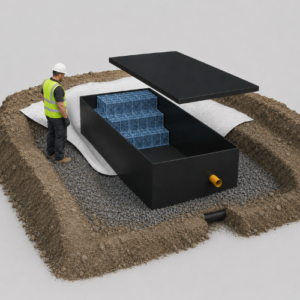
- Attenuation tank liners
- Balancing ponds
- Reservoirs
- Lagoons
- Canal lining
- Landfill lining systems
- Containment bunds
- Environmental protection projects
In each application, the objective is the same: to help protect the geomembrane from mechanical damage while maintaining the long-term performance of the waterproof lining system.
Key Benefits at a Glance
Protection geotextiles help:
- Protect geomembranes from puncture
- Reduce abrasion during installation
- Cushion against angular aggregates
- Extend the service life of lining systems
- Protect high-value waterproof membranes
- Improve long-term installation durability
Choosing the Right Protection Geotextile
Not every protection geotextile is suitable for every project. The most appropriate specification will depend on the geomembrane being protected, the surrounding materials and the expected loading conditions.
When selecting a protection geotextile, consider:
- The type of geomembrane being used
- The risk of puncture from surrounding materials
- Aggregate size and angularity
- Installation method
- Long-term loading conditions
- Project design life
Heavier protection geotextiles generally provide greater cushioning and puncture resistance, making them suitable for applications where the geomembrane is exposed to higher installation or operational loads.
The protection geotextile should always be selected as part of the overall lining system rather than in isolation, ensuring it is compatible with the geomembrane and the project specification.
Quick Rule of Thumb
If you’re unsure, here’s a simple way to remember it:
✅ Use a standard non-woven geotextile where separation, filtration or drainage are the primary objectives.
✅ Use a protection geotextile where the primary objective is helping to protect a geomembrane or waterproof lining from puncture and mechanical damage.
If your project includes both a waterproof liner and surrounding aggregate, a protection geotextile is often an important part of the overall lining system
Frequently Asked Questions
What is a protection geotextile?
A protection geotextile is a thick, non-woven geotextile designed to help protect geomembranes and waterproof liners from puncture, abrasion and mechanical damage. It acts as a cushioning layer between the membrane and surrounding construction materials.
Do I always need a protection geotextile with a geomembrane?
Not always. The need for a protection geotextile will depend on the project specification, ground conditions and the materials that will come into contact with the geomembrane. Where there is a risk of puncture or abrasion, a protection geotextile is commonly specified.
Can a protection geotextile prevent punctures?
A protection geotextile helps reduce the risk of puncture by cushioning the geomembrane against sharp aggregates, concrete edges and other hard materials. However, the overall performance of the lining system will depend on the project design, installation quality and site conditions.
Where are protection geotextiles commonly used?
Protection geotextiles are widely used in attenuation tanks, reservoirs, ponds, lagoons, containment systems, landfill lining projects and other applications where geomembranes require additional protection.
Is a protection geotextile waterproof?
No. A protection geotextile is permeable and is not designed to act as a waterproof barrier. Its primary purpose is to help protect the geomembrane, which provides the waterproofing function.
What’s the difference between a standard non-woven geotextile and a protection geotextile?
Standard non-woven geotextiles are typically selected for separation, filtration and drainage applications. Protection geotextiles are specifically chosen where additional cushioning and puncture resistance are required to help protect geomembranes and waterproof lining systems.
Conclusion
Protection geotextiles play an important role in helping safeguard geomembranes and waterproof lining systems from puncture, abrasion and mechanical damage.
While they do not provide the waterproof barrier themselves, they help protect one of the most important components of the construction by cushioning the geomembrane against surrounding materials and installation loads.
Whether you’re installing an attenuation tank, balancing pond, containment system or reservoir, selecting the appropriate protection geotextile can help improve the long-term performance of the overall lining system.
If you’re unsure which protection geotextile is best suited to your project, our team can help identify the most appropriate solution based on your application, site conditions and project requirements.
Related Products
Geoworks TerraGrid Core Composite
Geoworks TerraGrid Core Biaxial Geogrid Range
- Geoworks TerraGrid Core 20 Biaxial Geogrid
- Geoworks TerraGrid Core 30 Biaxial Geogrid
- Geoworks TerraGrid Core 40 Biaxial Geogrid
