


- What is an impermeable attenuation tank?
- Why use an HDPE geomembrane?
- Choosing the correct geomembrane thickness
- The role of protection fleece
- Typical attenuation tank build-up
- Pipe penetrations and top hat units
- Jointing and sealing considerations
- Common installation mistakes to avoid
- Recommended products
What Is an Impermeable Attenuation Tank?
An attenuation tank is designed to temporarily store stormwater and release it at a controlled rate into the drainage network. While many attenuation systems are designed to allow infiltration into the surrounding ground, some projects require a completely sealed solution.
An impermeable attenuation tank uses a geomembrane liner to prevent water from entering or leaving the storage system. These tanks are commonly specified where ground conditions, contamination risks or project requirements prevent infiltration.
Typical applications include:
- Commercial developments
- Industrial sites
- Brownfield land
- Highway drainage schemes
- Sustainable Drainage Systems (SuDS)
- Areas with poor infiltration rates
Why Use an HDPE Geomembrane?
HDPE geomembranes provide a robust waterproof barrier around the attenuation tank structure.
Benefits include: 
- Excellent waterproofing performance
- High puncture resistance
- Long service life
- Chemical resistance
- Suitable for demanding civil engineering applications
- Fully weldable for watertight joints
HDPE geomembranes are commonly available in various thicknesses, with 0.6mm and 1.0mm often used for attenuation tank encapsulation projects.
Choosing the Correct Geomembrane Thickness
The required thickness will depend on the project specification, installation conditions and designer requirements.
Generally:
0.6mm HDPE Geomembrane
Suitable for many attenuation tank applications where appropriate protection measures are incorporated.
1.0mm HDPE Geomembrane
Offers increased puncture resistance and may be preferred on larger commercial projects or where additional durability is required.
If you’re unsure which specification is most suitable, read our guide comparing 0.6mm and 1.0mm HDPE geomembranes.
The Importance of Protection Fleece
A geomembrane should not typically be installed directly against potentially damaging materials.
A 300gsm non-woven protection fleece is commonly used to help protect the membrane from puncture during installation and backfilling.
Benefits include: 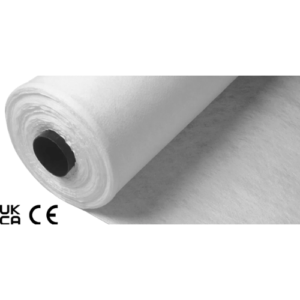
- Additional cushioning
- Reduced puncture risk
- Improved durability
- Protection against sharp aggregates
- Enhanced long-term performance
Typical Impermeable Attenuation Tank Build-Up
A typical installation may consist of:
- Prepared formation
- 50mm bedding layer of suitable non-angular stone
- Attenuation crates
- HDPE geomembrane wrapped around the tank
- 300gsm protection fleece over the top and sides
- Suitable backfill material
The exact specification should always follow the project design and manufacturer recommendations.
Pipe Penetrations and Top Hat Units
One of the most critical areas of any impermeable attenuation tank is where inlet, outlet and vent pipes pass through the membrane.
Top hat units are commonly used to create watertight seals around pipe penetrations and help maintain the integrity of the liner system.
Using correctly installed top hat units can significantly reduce the risk of leaks around service entries.
Jointing and Sealing Considerations
Creating a reliable impermeable system requires careful attention to membrane joints.
Depending on the installation method, jointing may involve:
- Thermal welding
- Double-sided jointing tape
- Single-sided sealing tape
- Specialist detailing around penetrations
Always follow the membrane manufacturer’s recommendations for jointing and testing procedures.
Common Installation Mistakes to Avoid
Some of the most common issues include:
- Failing to use protection fleece
- Damaging the membrane during installation
- Poorly sealed pipe penetrations
- Inadequate overlap detailing
- Backfilling with unsuitable material
- Not protecting the membrane from sharp objects
Taking time to detail the system correctly can help avoid costly remedial works later.
Recommended products
For a complete impermeable lining solution, consider the following products
- 0.6mm HDPE Geomembrane Range
- 1.0mm HDPE Geomembrane Range
- 300gsm Protection Fleece Range
- Double-Sided Butyl Jointing Tape
- Single-Sided Jointing Tape
- Top Hat Units
Choosing the correct roll size can also help reduce installation time and ensure consistent coverage across the arena base.
If you require assistance selecting the correct specification or need pricing for project quantities, our team is happy to help.
Contact us on 03338803558 or info@drainageandcivilsdirect.co.uk and we’ll point you to the right product and get it delivered fast.
