

Topics Covered
- What is a geotextile?
- What is a geogrid?
- The key differences between geogrids and geotextiles
- When should a geotextile be used?
- When should a geogrid be used?
- Can geogrids and geotextiles be used together?
- Geocomposite solutions
- Choosing the right solution
- Frequently asked questions
Geogrid vs Geotextile: What’s the Difference?
Ground stabilisation and civil engineering projects often require the use of geosynthetics to improve performance, increase longevity and reduce construction costs. Two of the most commonly specified products are geogrids and geotextiles.
While they are often used together, they perform very different functions within a construction build-up.
What Is a Geotextile?
A geotextile is a permeable fabric used to separate, filter, protect and drain within civil engineering and construction projects.
Geotextiles are typically installed between soil and aggregate layers to prevent the intermixing of materials while allowing water to pass through.
Common applications include:
 Access roads
- Driveways
- Car parks
- Drainage trenches
- French drains
- Attenuation tanks
- Solar farm infrastructure
- Ground improvement schemes
Depending on the project requirements, geotextiles may be woven or non-woven.
What Is a Geogrid?
A geogrid is a polymer grid structure designed to reinforce and stabilise ground.
Unlike geotextiles, geogrids are not intended to provide filtration. Instead, they work by interlocking with aggregate to create a mechanically stabilised layer that distributes loads more effectively.
By improving load distribution, geogrids can help reduce rutting, improve ground performance and minimise aggregate requirements.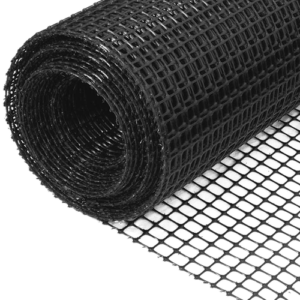
Geogrids are commonly used for:
- Haul roads
- Working platforms
- Access roads
- Construction compounds
- Industrial yards
- Solar farms
- Weak ground stabilisation
The Key Differences Between Geogrids and Geotextiles
Geotextiles
Primary functions:
- Separation
- Filtration
- Drainage
- Protection
Typical applications:
- Drainage systems
- Separation layers
- Geomembrane protection
- Sub-base separation
Geogrids
Primary functions:
- Reinforcement
- Load distribution
- Ground stabilisation
Typical applications:
- Weak ground
- Haul roads
- Working platforms
- Ground improvement schemes
In simple terms, geotextiles manage the movement of soil and water, while geogrids improve the structural performance of the ground.
When Should a Geotextile Be Used?
A geotextile is usually specified where separation or filtration is required.
For example, beneath a new access road, a geotextile may be installed between the natural ground and aggregate layer to prevent contamination of the stone by fine soils.
Geotextiles are also widely used within drainage systems where water must pass through while soil particles are retained.
Typical applications include:
- Drainage trenches
- French drains
- Roads
- Driveways
- Car parks
- Environmental containment systems
When Should a Geogrid Be Used?
A geogrid is typically specified where additional reinforcement is required.
On weak ground, the aggregate can spread under load, causing rutting and settlement. A geogrid helps lock the aggregate together and distribute loads more evenly.
Typical applications include:
- Haul roads
- Working platforms
- Construction compounds
- Industrial developments
- Renewable energy projects
- Ground stabilisation works
Can Geogrids and Geotextiles Be Used Together?
Yes.
In many projects, geotextiles and geogrids are installed together because they perform different functions.
A common build-up consists of:
- Natural ground
- Geotextile
- Geogrid
- Aggregate sub-base
In this arrangement:
- The geotextile provides separation and filtration.
- The geogrid provides reinforcement and load distribution.
This combination can improve performance while extending the lifespan of the construction.
What Is a Geocomposite?
A geocomposite combines multiple geosynthetic functions into a single product.
For example, some products combine a biaxial geogrid with an attached non-woven geotextile.
This allows reinforcement, separation and filtration to be achieved using a single layer, helping reduce installation time and simplify construction.
Geocomposites are commonly used on:
- Access roads
- Construction compounds
- Working platforms
- Solar farms
- Industrial developments
Choosing the Right Solution
The correct solution will depend on:
- Ground conditions
- Loading requirements
- Drainage requirements
- Project design
- Installation requirements
In some projects, a geotextile alone may be sufficient.
In others, a geogrid may be required to provide additional reinforcement.
Where both separation and reinforcement are needed, a combination of geotextile and geogrid, or a geocomposite product, may provide the most effective solution.
Frequently Asked Questions
Is a geogrid the same as a geotextile?
No. Geotextiles provide separation, filtration and protection, while geogrids provide reinforcement and load distribution.
Do I need a geogrid or a geotextile?
This depends on the application. Geotextiles are typically used for separation and filtration, while geogrids are used where reinforcement is required.
Can geogrids and geotextiles be used together?
Yes. They are frequently installed together because they perform different but complementary functions.
What is a geocomposite?
A geocomposite combines multiple geosynthetic functions, such as reinforcement, separation and filtration, within a single product.
Are geogrids suitable for weak ground?
Yes. Geogrids are specifically designed to improve load distribution and stabilise weak ground conditions.
Conclusion
Although geogrids and geotextiles are often used within the same construction projects, they serve different purposes.
Geotextiles provide separation, filtration and protection, while geogrids provide reinforcement and load distribution.
Understanding these differences is essential when designing roads, working platforms, drainage systems and ground stabilisation schemes. Selecting the correct product, or combination of products, can significantly improve long-term performance and reduce maintenance requirements.
Understanding the difference between geogrids and geotextiles can help ensure the correct product is selected for the application and prevent costly installation mistakes.
Related Products
If you’re planning a ground stabilisation, drainage or civil engineering project, the following products may also be of interest:
- MultiTrack 1000 Non-Woven Geotextile – Suitable for separation and filtration beneath roads, driveways and drainage systems.
- FasTrack Orange Woven Geotextile – High-visibility woven geotextile designed for separation and contaminated land applications.
- TerraTrack Pro 300gsm Protection Fleece – Heavy-duty protection geotextile for attenuation tanks, geomembranes and containment systems.
- TerraGrid Core 20 Biaxial Geogrid – Ground reinforcement for light to medium-duty applications.
- TerraGrid Core 30 Biaxial Geogrid – High-performance geogrid for access roads and ground stabilisation.
- TerraGrid Core 40 Biaxial Geogrid – Heavy-duty reinforcement for weak ground and working platforms.
- TerraGrid Core Composite 3030 – Combined geogrid and geotextile solution providing reinforcement, separation and filtration.
- HDPE Geomembrane 0.6mm – Flexible liner suitable for attenuation tanks, containment systems and environmental projects.
Related Articles
Continue learning with our technical guides:
- Why Are Some Geotextiles Orange?
- What Is a Geogrid and How Does It Work?
- How to Stabilise Soft Ground for Roads and Working Platforms
- Choosing the Right Geotextile for Your Project
- Geogrids for Solar Farm Developments
