

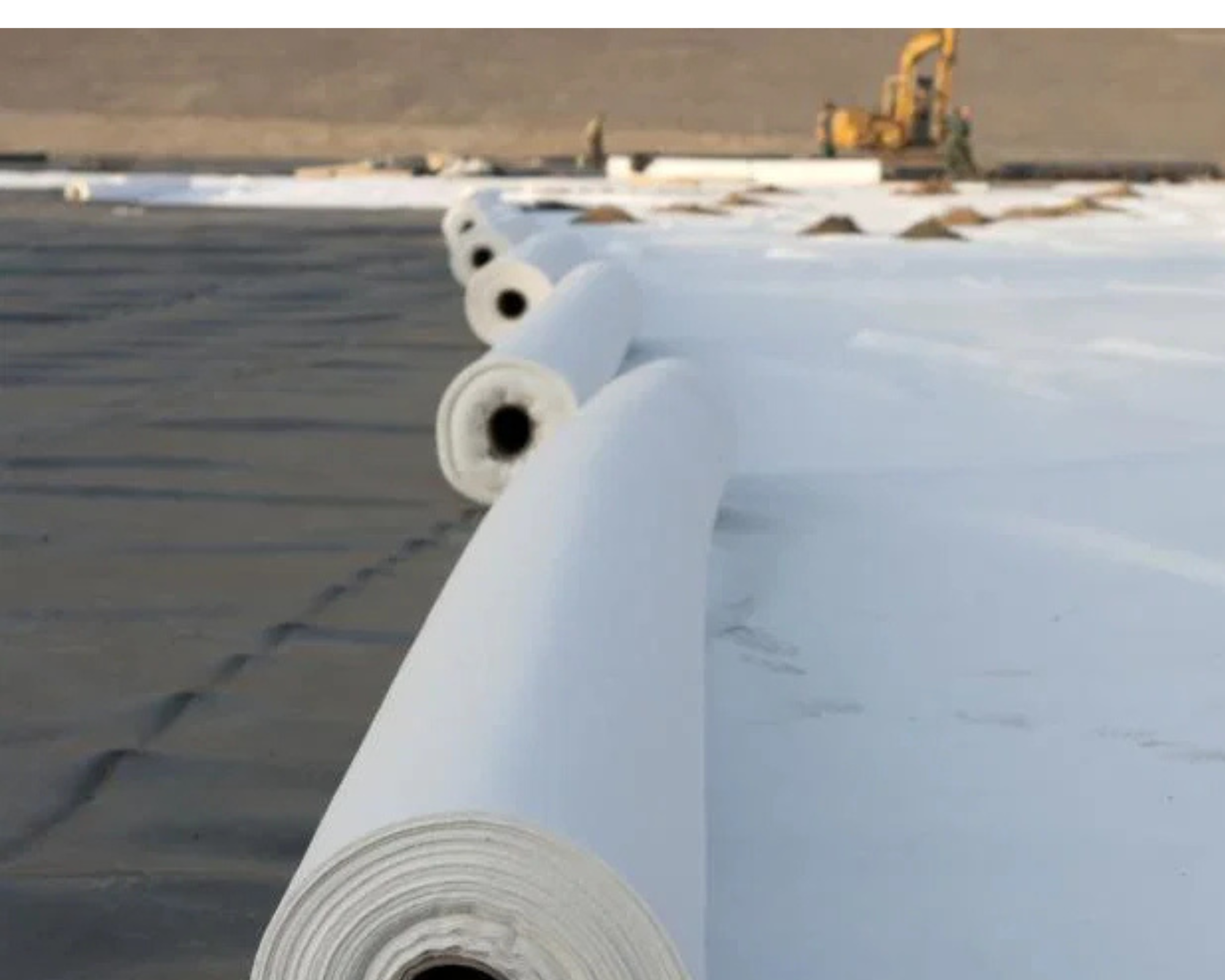
Woven vs Non-Woven Geotextiles: What’s the Difference?
Choosing between a woven and non-woven geotextile can be confusing, particularly if you’re not familiar with geosynthetics. Although both products are designed to improve the performance of the ground, they are manufactured differently and each performs best in different applications.
Selecting the wrong type of geotextile can reduce drainage performance, contaminate aggregate layers or fail to provide the level of ground support your project requires.
The good news is that choosing the right product is much simpler once you understand the job it needs to do.
In this guide, we’ll explain the differences between woven and non-woven geotextiles, where each should be used and how to choose the right solution for your project.
Topics Covered
- What is a woven geotextile?
- What is a non-woven geotextile?
- What’s the difference?
- When should a woven geotextile be used?
- When should a non-woven geotextile be used?
- Can they both provide separation?
- Which geotextile is right for your project?
- Frequently asked questions
Which Is Better ….Woven or Non-Woven?
It’s probably the most common question asked by contractors, groundworkers and engineers.
The honest answer is…
Neither.
A woven geotextile isn’t better than a non-woven geotextile, and a non-woven geotextile isn’t better than a woven geotextile.
They are simply designed to perform different jobs.
As a simple rule:
- Choose a woven geotextile if your main priority is high-strength separation beneath roads, access tracks and other trafficked surfaces.
- Choose a non-woven geotextile when filtration, drainage, permeability or protection are the priority.
Think of it like choosing the right tool for the job.
You wouldn’t use a shovel to tighten a bolt, and you wouldn’t use a spanner to dig a trench. Both tools have a purpose, but they’re designed to solve different problems.
Geotextiles work in exactly the same way.
The key is understanding what you need the geotextile to achieve before choosing the product.
Once you understand that, selecting the right geotextile becomes much simpler.
What Is a Woven Geotextile?
A woven geotextile is manufactured by weaving high-strength polymer tapes or fibres together to form a strong, stable fabric.
Its primary purpose is to separate different ground layers while providing additional strength and improve the performance of the sub-base
Typical applications include:
- Access roads
- Haul roads
- Working platforms
- Car parks
- Industrial developments
- Ground stabilisation
- Contaminated land
Where strength and long-term performance are the priority, woven geotextiles are often the preferred solution.
What Is a Non-Woven Geotextile?
A non-woven geotextile is manufactured by bonding synthetic fibres together to create a permeable fabric.
Unlike woven geotextiles, non-woven products are primarily designed to allow water to pass through while retaining fine soil particles.
This makes them particularly effective where filtration, drainage and protection are the main design requirements.
Typical applications include:
- French drains
- Drainage systems
- Soakaways
- Attenuation tanks
- Pond liners
- Environmental projects
- General ground separation
Non-woven geotextiles are also widely used to protect geomembranes and other waterproof liners from puncture damage during installation and throughout the life of the system.
Key Differences at a Glance
| Feature | Woven Geotextile | Non-Woven Geotextile |
|---|---|---|
| Primary function | Separation | Filtration, drainage & protection |
| Water permeability | Lower | Higher |
| Tensile strength | Higher | Lower |
| Typical applications | Roads, working platforms, haul roads | Drainage, soakaways, attenuation tanks |
| Best suited for | Load-bearing applications | Water management applications |
When Should You Use a Woven Geotextile?
A woven geotextile is typically selected where robust separation between soil and aggregate is required, particularly beneath trafficked areas where long-term pavement performance is important.
Its high tensile strength helps reinforce the construction while preventing the underlying soil from mixing with the aggregate above. This helps maintain the integrity of the sub-base and improve long-term performance.
Woven geotextiles are commonly used for:
- Access roads
- Haul roads
- Working platforms
- Car parks
- Industrial developments
- Contaminated land applications
Where heavy vehicle traffic or weak ground conditions are expected, a woven geotextile often forms part of the overall ground improvement solution.
When Should You Use a Non-Woven Geotextile?
A non-woven geotextile is generally selected where filtration, drainage or protection are the primary requirements.
Its permeable structure allows water to pass through while retaining fine soil particles, helping maintain the performance of drainage systems and preventing aggregate from becoming contaminated.
Non-woven geotextiles are commonly used for:
- French drains
- Land drainage
- Soakaways
- Attenuation tanks
- Pond liners
- Sustainable drainage systems (SuDS)
- Geomembrane protection
They are also widely used beneath aggregate where separation and water movement are both required, making them a versatile solution for many civil engineering and landscaping projects.
Quick Rule of Thumb
✅ Choose a woven geotextile if your main priority is robust separation and long-term sub-base performance.
✅ Choose a non-woven geotextile if your biggest concern is water movement and drainage.
If your project requires both reinforcement and filtration, consider whether a geocomposite may be the most suitable solution.
Frequently Asked Questions
Which is better, a woven or non-woven geotextile?
Neither is better than the other. Woven and non-woven geotextiles are designed to perform different functions. The right choice depends on your project requirements, ground conditions and the function the geotextile needs to perform.
Can both woven and non-woven geotextiles provide separation?
Yes. Both types of geotextile can be used to separate soil from aggregate. Woven geotextiles are generally selected where high-strength separation is required beneath trafficked areas, while non-woven geotextiles are often chosen where separation is needed alongside filtration and drainage.
Which geotextile is best for drainage?
Non-woven geotextiles are generally the preferred choice for drainage applications because they allow water to pass through while retaining fine soil particles. This helps maintain the long-term performance of drainage systems.
Which geotextile is best for roads and access tracks?
Woven geotextiles are commonly used beneath roads, access tracks and other trafficked areas where robust separation between the subgrade and aggregate is required to support long-term pavement performance.
Can a geotextile reinforce weak ground?
A geotextile helps improve the performance of the construction by providing separation, filtration, drainage or protection. Where reinforcement and load distribution are the primary objectives, a geogrid is typically used as part of the ground improvement solution.
Can woven and non-woven geotextiles be used together?
Yes. Some projects use different geotextiles within the same construction where each performs a specific engineering function. The most appropriate solution will depend on the project design and site conditions.
What if my project requires both separation and reinforcement?
Where both high-strength separation and aggregate reinforcement are required, a geocomposite may provide the most efficient solution by combining a geotextile with a geogrid in a single product.
Conclusion
Choosing between a woven and non-woven geotextile doesn’t have to be complicated. The key is understanding the role the geotextile needs to perform within your project.
As a general rule, woven geotextiles are selected where high-strength separation beneath trafficked areas is required, while non-woven geotextiles are typically chosen where filtration, drainage, protection and water management are the primary objectives.
By selecting the correct geotextile at the design stage, you can help improve construction performance, maintain the integrity of the sub-base and extend the lifespan of the finished project.
If you’re unsure which geotextile is right for your application, our team can help you identify the most suitable solution based on your project requirements.
Related Products
- Geoworks MultiTrack 1000 Non-Woven Geotextile
- Geoworks FasTrack Orange Woven Geotextile
- Geoworks FasTrack 609 Black Woven Geotextile
- Geoworks TerraTrack Pro 300gsm Protection Fleece
- Geoworks TerraGrid Core Composite 3030
