

What Is a Geogrid? Uses, Benefits and How It Works
Ground conditions play a crucial role in the success of any construction project. Whether you’re building an access road, working platform, car park or large-scale infrastructure development, poor ground stability can lead to rutting, settlement and costly maintenance if not addressed correctly.
One of the most effective ways of improving ground performance is through the use of geogrids. Designed to reinforce weak ground and improve load distribution, geogrids have become an essential component in modern civil engineering, construction and ground stabilisation projects.
But what exactly is a geogrid, how does it work, and when should it be used?
In this guide, we’ll explain how geogrids reinforce the ground, the different types available, where they’re commonly used and how they compare with geotextiles. Whether you’re a contractor, engineer, developer or self-builder, this guide will help you understand when a geogrid is the right solution for your project.
Topics Covered
- What is a geogrid?
- How does a geogrid work?
- Why are geogrids used?
- Types of geogrids explained
- Common geogrid applications
- The benefits of using a geogrid
- Can a geogrid reduce aggregate?
- Geogrid vs geotextile
- Choosing the right geogrid for your project
- Frequently asked questions
What Is a Geogrid?
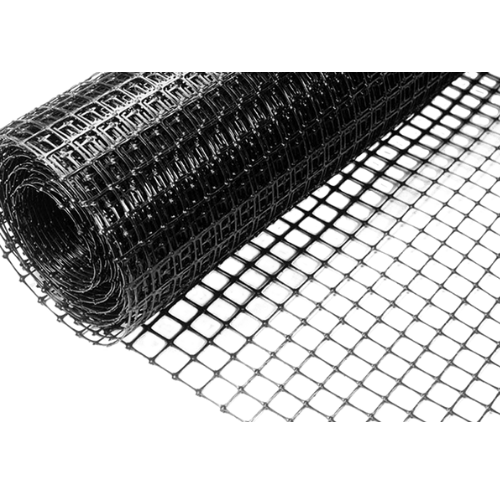
A geogrid is a geosynthetic material used to reinforce and stabilise the ground beneath roads, car parks, working platforms, access tracks and other civil engineering structures.
Manufactured from high-strength polymers, geogrids have an open grid structure that allows aggregate to interlock within the apertures. This creates a mechanically stabilised layer capable of distributing loads more effectively than aggregate alone.
Unlike geotextiles, which are primarily used for separation and filtration, geogrids are designed to reinforce the ground by improving the interaction between the aggregate and the underlying subgrade.
Geogrids are widely used where ground conditions are weak or where additional stability is required to support construction traffic and long-term loading.
Common applications include:
- Roads and highways
- Construction haul roads
- Working platforms
- Car parks
- Industrial developments
- Housing developments
- Rail infrastructure
- Solar farm access roads
- Ground improvement projects
- By improving load distribution and reducing movement within the aggregate layer, geogrids can help extend the lifespan of a construction while reducing maintenance requirements.
How Does a Geogrid Work?
A geogrid works by interlocking with the aggregate placed above it, creating a reinforced layer that spreads loads more effectively across the underlying ground.
As aggregate is compacted, the stone particles lock into the open apertures of the geogrid. This mechanical interlock restricts the lateral movement of the aggregate, helping to create a stronger and more stable sub-base.
Instead of loads being concentrated directly beneath vehicle wheels or heavy equipment, the reinforced layer distributes the forces over a wider area. This reduces stress on the underlying soil and improves the overall performance of the construction.
The result is a more stable foundation that is less susceptible to rutting, settlement and deformation, particularly where ground conditions are poor.
In many applications, geogrids can also help reduce the amount of imported aggregate required by improving the efficiency of the sub-base. However, any reduction in aggregate depth should always be based on a site-specific design carried out by a suitably qualified engineer.
Why Are Geogrids So Effective?
Unlike traditional construction methods that rely solely on increasing aggregate thickness, geogrids improve the performance of the aggregate itself.
By locking the aggregate together, the geogrid creates a mechanically stabilised layer that:
- Improves load distribution
- Restricts lateral movement of aggregate
- Reduces rutting and settlement
- Improves the bearing capacity of weak ground
- Increases the lifespan of roads and hardstandings
- Helps create a more stable construction platform
This makes geogrids a cost-effective solution for projects where ground conditions would otherwise require deeper excavation or significantly greater quantities of imported stone.
Types of Geogrids Explained
Geogrids are available in several different configurations, each designed for specific ground conditions and engineering applications.
Understanding the differences can help ensure the correct product is selected for your project.
Biaxial Geogrids
Biaxial geogrids provide strength in both directions and are the most commonly used type for ground stabilisation.
They are ideal for distributing loads across weak ground and improving the performance of aggregate sub-bases.
Typical applications include:
- Access roads
- Car parks
- Haul roads
- Working platforms
- Housing developments
- Industrial sites
- Ground improvement
Geocomposites
Geocomposite products combine a biaxial geogrid with an attached non-woven geotextile.
This provides reinforcement, separation and filtration within a single product, helping reduce installation time and simplify construction.
Typical applications include:
- Access roads
- Working platforms
- Construction compounds
- Solar farms
- Industrial developments
Common Geogrid Applications
Geogrids are used across a wide range of construction and civil engineering projects where improved ground stability and load distribution are required.
Typical applications include:
- Access roads
- Haul roads
- Working platforms
- Car parks
- Industrial yards
- Housing developments
- Commercial developments
- Solar farm infrastructure
- Ground improvement schemes
- Temporary construction compounds
In many of these applications, geogrids are installed alongside geotextiles to create a stable, long-lasting foundation while helping maintain separation between the aggregate and underlying soils.
The Benefits of Using a Geogrid
Using a geogrid can provide several engineering and commercial benefits, particularly where ground conditions are weak or variable.
Key benefits include:
- Improves load distribution
- Reinforces weak ground
- Reduces rutting
- Minimises settlement
- Improves bearing capacity
- Enhances long-term performance
- Can reduce aggregate requirements*
- Reduces excavation in some applications
- Extends pavement life
- Helps reduce maintenance costs
Any reduction in aggregate thickness should always be based on a project-specific design carried out by a suitably qualified engineer.
Can a Geogrid Reduce Aggregate?
One of the most common questions asked by contractors is whether a geogrid can reduce the amount of aggregate required on a project.
In many cases, the answer is yes.
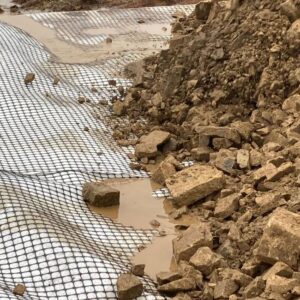
Because a biaxial geogrid improves load distribution and reinforces the aggregate layer, it can increase the efficiency of the sub-base. This may allow a reduction in aggregate thickness when compared with an unreinforced construction.
However, the amount of aggregate that can be saved will depend on several factors, including:
- Ground conditions
- Traffic loading
- Aggregate specification
- Project design
- Performance requirements
Any reduction in aggregate should be verified through an appropriate engineering design rather than assumed during construction.
A correctly designed geogrid solution can not only reduce imported materials but also minimise excavation, improve construction efficiency and lower overall project costs.
Choosing the Right Geogrid for Your Project
Selecting the right geogrid depends on the ground conditions, loading requirements and intended application. There is no one-size-fits-all solution, so it’s important to consider the performance required rather than simply choosing the strongest product.
For many access roads, car parks and general ground stabilisation projects, a biaxial geogrid provides an effective method of reinforcing the aggregate layer and improving load distribution.
Where higher loading or more demanding ground conditions exist, a higher-strength biaxial geogrid may provide additional reinforcement and long-term performance.
If your project requires both reinforcement and separation, a geocomposite solution that combines a biaxial geogrid with an integrated non-woven geotextile can simplify installation by providing multiple functions within a single product.
Before selecting a geogrid, consider:
- Ground conditions
- Soil strength
- Traffic loading
- Aggregate specification
- Drainage requirements
- Project design
- Construction method
If you’re unsure which geogrid is suitable for your project, our team can provide technical guidance to help identify the most appropriate solution.
Frequently Asked Questions
What is a geogrid used for?
Geogrids are used to reinforce weak ground, improve load distribution and increase the performance of aggregate sub-bases beneath roads, working platforms, car parks and other civil engineering structures.
How does a geogrid work?
A geogrid interlocks with the aggregate placed above it, creating a reinforced layer that distributes loads over a wider area and reduces movement within the sub-base.
Do I always need a geotextile beneath a geogrid?
Not always. The requirement for a geotextile will depend on the ground conditions and project design. On many weak or fine-grained soils, a geotextile is installed beneath the geogrid to provide separation and filtration.
Can a geogrid reduce aggregate depth?
In some applications, yes. By improving load distribution and reinforcing the aggregate layer, a geogrid may allow a reduction in aggregate thickness. Any reduction should always be confirmed through an appropriate engineering design.
What is the difference between a biaxial geogrid and a geocomposite?
A biaxial geogrid provides reinforcement by interlocking with the aggregate layer. A geocomposite combines a biaxial geogrid with a non-woven geotextile, providing reinforcement, separation and filtration within a single product.
Conclusion
Geogrids have become an essential part of modern ground stabilisation, helping improve the performance of roads, working platforms, access tracks and other civil engineering projects.
By reinforcing the aggregate layer and distributing loads more effectively, geogrids can improve ground stability, extend the lifespan of a construction and, in many applications, reduce the amount of imported aggregate required.
Choosing the correct geogrid will always depend on the specific requirements of the project, including ground conditions, loading and design criteria. Understanding how geogrids work is the first step towards selecting the most appropriate solution for long-term performance.
Related Products
The following products are commonly used for ground stabilisation and geosynthetic applications:
- TerraGrid Core 20 Biaxial Geogrid
- TerraGrid Core 30 Biaxial Geogrid
- TerraGrid Core 40 Biaxial Geogrid
- TerraGrid Core Composite 3030
- MultiTrack 1000 Non-Woven Geotextile
- FasTrack Orange Woven Geotextile
- TerraTrack Pro 300gsm Protection Fleece
- HDPE Geomembrane 0.6mm
Related Articles
Continue learning with our technical guides:
- Geogrid vs Geotextile: What’s the Difference?
- Why Are Some Geotextiles Orange?
- How to Stabilise Soft Ground for Roads and Working Platforms (Coming Soon)
- Choosing the Right Geotextile for Your Project (Coming Soon)
- Geogrids for Solar Farm Developments (Coming Soon)
